


 Top writing services
How do AI detectors work?
So, how is AI detected? AI detectors rely on specific algorithms to scrutinize text. These detectors are not just regular tools; they're specialized software that compares writing styles, sentence structures, and the complexity of vocabulary. Sometimes, they also measure how frequently certain phrases or keywords appear.
Unfortunately, I've learned this the hard way after buying an essay that didn't pass the detector's sniff test. Poor quality, inconsistency, and lack of depth often give away AI-generated content. Even if a few lucky students get away with it, betting on such a shaky option doesn't make sense when you can rely on legitimate academic writing services.
Perplexity
So, what do AI detectors look for? One metric is perplexity, which measures how well the probability distribution of a text piece predicts a sample. In plain English, it gauges how unexpected each new word is. Detectors are savvy enough to spot mistakes and assess the sources cited in the text.
- Perplexity: Gauges the unpredictability of words in a sequence.
- Mistakes: Frequent errors can indicate machine-generated text.
- Sources: Illogical or mismatched citations raise red flags.
After enduring a lousy essay I bought online, I can assure you that these detectors use perplexity to flush out poorly generated content. It's worth noting that you have a higher chance of passing such scrutiny when using reputable academic writing services.
Burstiness
If you're wondering how to make AI writing undetectable, think again. AI detectors are getting better every day. They now use burstiness as a metric, measuring sudden spikes in specific words or phrases within the text. It often happens in AI-generated writing, where algorithms may overuse certain expressions.
Sure, it's tempting to consider gaming the system, but the risks outweigh the benefits. I've been through the grind of trying to bypass these detectors. Trust me, you're better off sticking with quality human writing to avoid the pitfalls of plagiarism and low-grade work.
How reliable are AI detectors?
So, you may want to know how to make AI generated text undetectable. Honestly, you'd have a hard time outsmarting the detectors. Even though they aren't flawless, these software pieces are becoming increasingly sophisticated. I've had the misfortune of buying a subpar essay that was immediately flagged. The technology's reliability may vary, but it's constantly improving. Instead of focusing on outsmarting the system, investing in high-quality, human-written content that meets academic standards is more productive.
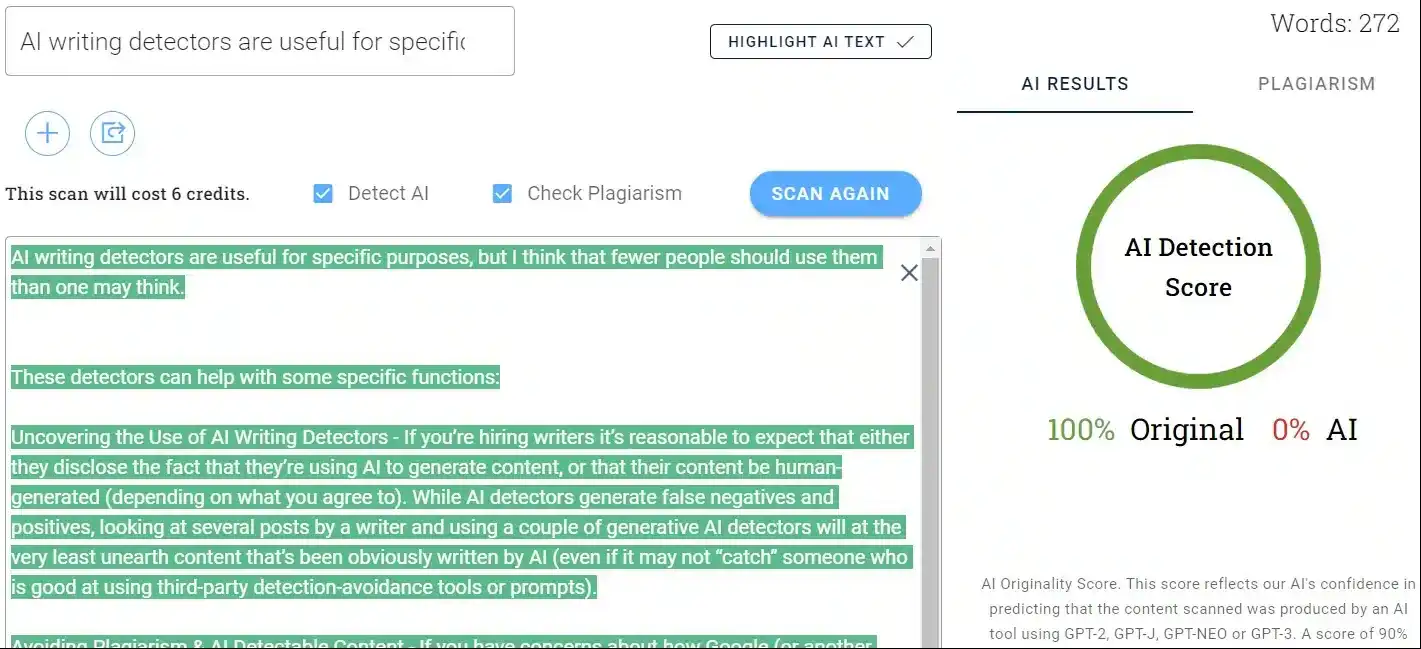
AI Detectors vs. Plagiarism Checkers
Thinking about how to get around AI detectors? Well, it's crucial to understand the difference between AI detectors and traditional plagiarism checkers. Unlike plagiarism tools focusing primarily on citation and matching content to existing sources, AI detectors scrutinize the text for signs of machine generation.
The metrics used can range from writing style to the complexity of sentences. Given the finesse of these detectors, it's a bad idea to think you can game the system, especially if your academic or professional reputation is at stake. AI-generated works are more likely to get flagged, rendering your attempts to use them counterproductive.
What are AI Detectors Used For?
You might be wondering, are AI detectors accurate? While their main aim is to distinguish between human-written and machine-generated text, their accuracy isn't foolproof. I can attest to this, having been burned by a shoddy essay I mistakenly thought would pass muster.
These detectors serve multiple sectors, from academia to the corporate world. They help maintain content quality and thwart attempts to humanize AI text for deceptive purposes. But the real crux of their usage is to preserve the integrity of human thought and creativity. Whether it's a student's assignment or a critical business report, ensuring the work is genuinely human is pivotal.
Detecting AI Writing Manually
For those skeptical about automated methods, you might wonder how to check if AI wrote an essay. It's possible to do manual checks on the work. I've gone through this drill when buying essays, and it's an eye-opening experience. Look for inconsistencies in tone, awkward phrasing, or overly complex sentences. Even the best AI can't mimic human nuance perfectly.
Overly Polite Language
Here is how to tell if an essay was written by AI. One glaring sign is an overly polite or formal language. AI generators often lack the subtlety of human expression.
- Overly Polite Language: Robots often overdo formalities.
- Generator: Check if the essay feels mechanically structured.
- Services: Are you using a reputable source?
- Accuracy: Does the language feel too calculated?
After trying multiple services, I found this is a common issue. These generators often lack the accuracy and nuance that human writers bring. Trust me, if you opt for a reputable service, the benefits far outweigh the risks of using generated text.

Hedging Language
Another thing to watch for is hedging language when the text seems indecisive or non-committal. How do AI checkers work to spot this? These programs have language metrics in place to pick up on excessive use of words like "probably," "maybe," or "could be." Having dealt with poor-quality essays laden with such terms, I can affirm that hedging language is a red flag.
Why? It often signals that the AI generator wasn't confident in its statements, something a human proofreader would easily catch. It is another reason to be skeptical of machine-generated writing and lean towards quality services that offer human proofreading.
Inconsistency in Voice
If there's one thing that immediately stands out when scrutinizing text, it's inconsistency in voice. Focus on the tone, style, and tense throughout the paper to check essay for AI. I've been on the receiving end of an inconsistent essay and can tell you it's a dead giveaway. A human writer maintains a consistent voice, something AI often struggles with. That's a red flag when the writing swings from formal to informal or the tense changes for no reason.
Moreover, some think they can outsmart these programs with an AI detection bypass. The reality is, however, that modern detection tools are increasingly sophisticated. They're designed to catch even the most subtle of voice changes, making any attempt to bypass them risky at best. If you're seeking external help for writing, investing in a quality human-written essay is your best bet. It ensures consistency in voice, reasoning, logic, and argumentation.
Unsourced or Incorrectly Cited Claims
Perhaps one of the most damaging aspects of AI-generated text is its tendency to make unsourced or incorrectly cited claims. I experienced this headache firsthand when I received an essay riddled with dubious "facts." If you're pondering how to pass AI detection, avoid using automated services that can't properly handle citations or make valid arguments. The AI detectors are wise to this tactic and will flag content that lacks credible sources or proper editing.
I've tried to game the system before, and it's not worth the hassle. If you're considering taking shortcuts with your writing assignments, weighing the risks is crucial. The potential for getting caught is much higher than you might think. Instead of bypassing detection algorithms, you should focus on producing quality content with proper citation and editing. The irony is that adhering to these academic standards will naturally pass AI scrutiny.
Logical Errors
Now, let's talk about logical errors. If you're curious about how to bypass AI detection, you might think focusing solely on the language will do the trick. Wrong. Advanced AI detectors are programmed to catch logical inconsistencies in the text, which I learned the hard way after purchasing an essay that made no sense.
AI-generated essays often suffer from poor logical flow, jumping from one point to another without a coherent argument. It's as if the machine is trying to hit as many topics as possible without understanding how they're connected. It is a massive red flag for AI detectors.
Instead of searching for ways to deceive detection systems, investing in quality, human-written content is a more reliable strategy. Humans have the innate ability to argue logically, connect ideas seamlessly, and present a coherent narrative – skills that machines are far from mastering. Trust me, having been through the loops of poor-quality automated writing services, the safest bet is to stick with genuine human talent.
FAQ
How accurate are AI detectors?
AI detectors are becoming increasingly accurate, though they're not infallible. But don't get too comfortable; these systems are evolving fast. I've been burned by subpar essays that were easily flagged, so you're better off not taking the risk.
How can I detect AI writing?
To detect AI writing manually, scrutinize for inconsistencies in tone, overly polite language, hedging, and logical errors. I've had to do this when I bought essays online, and it's quite revealing.
Can I cite ChatGPT?
Technically, you can cite ChatGPT in academic work. In APA Style, citing a ChatGPT response can be treated as personal communication due to the unique nature of the answers provided. In-text citation would appear as follows: (ChatGPT, personal communication, September 25, 2023).
How do I access ChatGPT?
Accessing ChatGPT is straightforward. It's a web-based service that you can access through a browser. Simply go to the website, sign up, and start chatting. Given the limitations of AI, use it as a supplementary tool, but don't expect it to replace human expertise.

