


 Top writing services
5 Risks of Relying on AI for Your Essays
First and foremost, is using AI plagiarism? Well, yes and no. Technically, it may not always be considered plagiarism, but it's ethically questionable. Here are reasons to think twice before you hit that 'generate' button.
Lack of Originality
People frequently ask, "Is using a paraphrasing tool cheating?" Such services give you the illusion of authenticity while merely repackaging someone else's thoughts. It's akin to applying a fresh coat of paint on a crumbling wall; it may look good for a moment, but it's fundamentally flawed.
Moreover, what you submit is devoid of your intellectual rigor and style. Services that generate or paraphrase content can't think critically or imbue the paper with your unique perspective. Consequently, you miss out on one of the most important aspects of education: developing your voice and your ability to think independently.
Inability to Critically Analyze
Another pitfall is the lack of critical analysis when you rely on artificial intelligence. AI and plagiarism issues aside, the main drawback is that machines don't understand context or nuance. They write based on algorithms, not critical thought. Here is a list of abilities AI lacks for critical analysis:
- Contextual understanding: AI cannot grasp the significance behind social or cultural contexts.
- Questioning sources: AI doesn't question the credibility or bias of the given data.
- Complex argumentation: AI can't construct nuanced arguments or counterarguments.
So, when you use AI to write your paper, you're submitting a piece devoid of analytical depth. It might meet the word count, but it will fall short in intellectual rigor, making you susceptible to low grades and academic scrutiny.
Inaccuracies and Errors
One of the more practical issues is the prevalence of inaccuracies and errors in machine-generated content. Bad essays are not just a result of poor student skills; they can also result from relying on imperfect AI technology. Language is complex and nuanced, filled with oddities that even the most advanced algorithms struggle to navigate.
This generation of AI tools can make glaring logical, factual inconsistencies and grammatical mistakes that an experienced human writer would easily avoid. When you employ AI to write your essay, you're not just courting ethical or academic risks but also gambling on the quality of the work itself.
Generic and Robotic Style of Writing
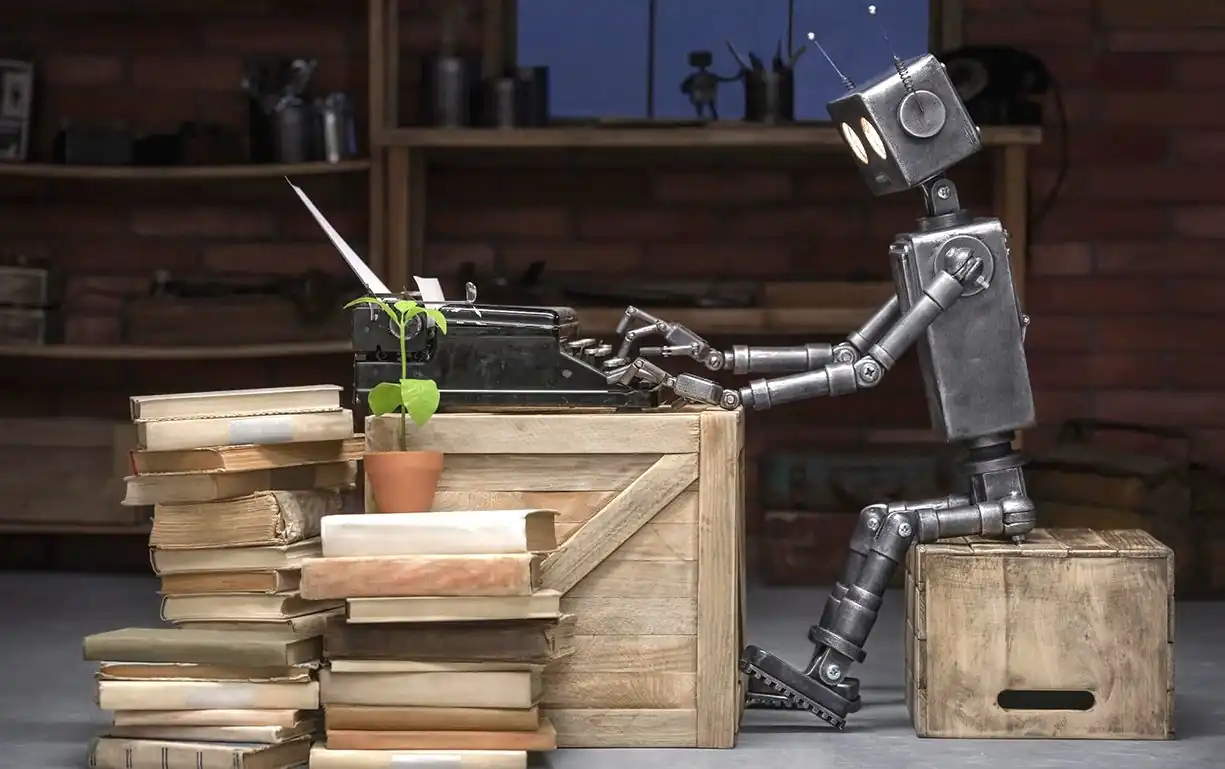
Let's talk about style, another critical element AI can't emulate effectively. An AI-generated essay often sounds like a machine wrote it. Essay cheaters may think they're saving time, but the cost is a lackluster paper that lacks any real human touch.
Your professors can tell when you're not engaging with the material. The writing might follow grammatical rules but often lacks a distinctive voice, natural flow, or compelling narrative. So you end up with a sterile, robotic text that fails to persuade and screams, "I didn't do this myself!"
Chances of Getting Caught
It's not just about ethics and quality; there's also a high likelihood of getting caught. The question arises again: Is AI plagiarism? If your educational institution defines plagiarism as presenting someone else's work as your own, then using AI for generating essays falls into that category.
Detection tools have become sophisticated, and your professors aren't naive; they can often spot an essay that doesn't sound like you. They may use sophisticated software beyond basic plagiarism checks, analyzing writing style and structure to identify inconsistencies. So not only are you compromising your integrity and academic standing, but you're also taking a significant risk of getting caught and facing severe repercussions.
Personal Style Matters
While the convenience of using AI to write essays may be tempting, the lack of personal style should be a significant concern. Your professors, peers, and future employers value your unique perspective and voice. Homework cheating via AI-written essays means you're squandering an opportunity to develop and showcase your style.
Your writing style is not just about the words you use; it's also about how you construct arguments, pose questions, and solve problems. Skipping this developmental stage could have a lasting impact on your academic and professional career. In essence, you're not just cheating the system but also yourself.
Social Context
In an academic setting, the collective understanding is that each student's work should be their own. Using AI to complete a cheating essay erodes the trust that forms the backbone of educational institutions. Here is a list of social consequences for cheating:
- Loss of credibility: Once caught cheating, regaining trust is an uphill battle.
- Eroding academic integrity: Wide-scale cheating undermines the value of education for everyone.
- Stigmatization: Even if you're not caught immediately, the stigma of cheating can have long-term effects.
In-depth research and individual perspectives are vital in academic writing. Cheating, especially through AI, dilutes the very essence of academic learning and societal values. By using these shortcuts, you're risking your grades and compromising the academic community's integrity.
Forget About Specific Instructions!
You might think an hour crafting instructions for an AI tool will yield a paper following those guidelines. Think again. AI accuracy is still a significant issue when following specific directives. AI chatbots often churn out generic phrases, bypassing the nuances and intricacies you outlined.
They might get the general idea correct, but the attention to detail will be severely lacking. It is another reason why AI can't replace the human touch in academic writing, as even the most advanced algorithms struggle to follow complex, layered instructions.
Is Using AI for Essays Cheating?
So, is using AI to write essays cheating? The consensus leans toward yes. However, if you're in a bind and can't write your essay, there are better alternatives. Why should I use AI writing tool? What's the point of doing that if I can delegate the task to professional writing services?
At least with a human writer, you will likely receive a well-thought-out, well-structured paper that adheres to your specific guidelines. Although it's not the ideal solution – since the best learning experience comes from doing the work yourself – it's a safer and more reliable option than entrusting your academic reputation to a machine.
FAQ
What are the potential drawbacks of relying on AI for essay writing?
Students who rely too heavily on artificial intelligence to complete their assignments encounter several significant drawbacks. These include ethical issues, a high risk of plagiarism, and potential inaccuracies. Furthermore, AI-generated essays often lack personal style, depth, and a nuanced understanding of genuine engagement with a topic.
How can using AI for essays affect the development of critical thinking and writing skills?
Using AI to write your essays can severely hinder your ability to create compelling arguments and critically analyze information. When you bypass the intellectual labor that goes into crafting an essay, you miss out on the essential skills of researching, structuring your thoughts, and making persuasive arguments. These are crucial abilities you'll need in academia and your future career.
Are there concerns about the originality and authenticity of essays generated by AI?
Significant concerns exist about the originality and authenticity of essays produced by writing software. These tools merely aggregate existing information, meaning they can't provide a human writer's unique insights or perspectives. Not only does this create plagiarism issues, but it also results in a paper that lacks the nuanced understanding and individual voice that make academic essays meaningful and compelling.

